How to Build an Ethical Wardrobe on a Budget: A Practical Step-by-Step Guide
Building an ethical wardrobe does not require a complete closet overhaul or a designer budget. Most people assume sustainable fashion is reserved for those who can spend $90 on a T-shirt — but that framing misses the point entirely. The most ethical thing you can do with your wardrobe right now costs nothing: stop buying things you don't need.
This guide walks through a realistic, step-by-step approach to aligning your clothing choices with your values — without financial stress, guilt, or perfectionism.
What Does an "Ethical Wardrobe" Actually Mean?
An ethical wardrobe is one built around clothing that minimizes harm — to workers, to the environment, and to the systems that produce it. That covers three overlapping concerns: labor rights, environmental impact, and material sourcing.
On the labor side, ethical fashion means garments made by workers paid fair wages, working in safe conditions, without forced or child labor. The fast fashion industry has a well-documented record of offloading production to countries with weak labor protections, where workers earn poverty wages to meet impossible quotas.
On the environmental side, clothing production accounts for roughly 10% of global carbon emissions and is one of the largest consumers of freshwater. Synthetic fabrics like polyester shed microplastics with every wash. Natural and organic fabrics — organic cotton, linen, Tencel (lyocell) — carry significantly lower environmental footprints, though none are perfect.
Material sourcing ties both threads together. Where fibers come from, how they're processed, and what happens to the garment at end of life all factor into the ethical calculus. The slow fashion movement pushes back against disposability by valuing durability, craft, and longevity over trend cycles.
You don't need to master all of this before making a single decision. Understanding the basic dimensions — labor, environment, materials — gives you enough of a framework to start making better choices incrementally.
Start With a Wardrobe Audit Before You Buy Anything
A wardrobe audit is the single most important first step, and it costs absolutely nothing. Before spending a dollar on ethical fashion, find out what you already own.
Pull everything out of your closet. Sort into three piles: things you wear regularly, things you haven't touched in over a year, and things that no longer fit or need repair. Most people are surprised to discover they own far more than they thought — and that many of the "I have nothing to wear" moments come from poor organization, not genuine gaps.
Once you can see what you have, ask two questions about each item:
- Does this still serve me, or am I holding onto it out of guilt or habit?
- If I were shopping today, would I buy this?
Items that fail both questions can be donated, sold, or swapped. Items in the "wear regularly" pile reveal your actual style — which becomes the foundation of a capsule wardrobe. The gaps that remain after the audit are the only things worth purchasing.
This step matters because buying new ethical items to replace perfectly functional existing ones is not more sustainable. It's just more expensive.
Why Secondhand Shopping Is Your Biggest Budget Ally
Secondhand shopping is the most accessible and affordable entry point into ethical fashion — full stop. Thrift stores, consignment shops, and online resale platforms extend the life of garments that already exist, which sidesteps the production impact entirely.
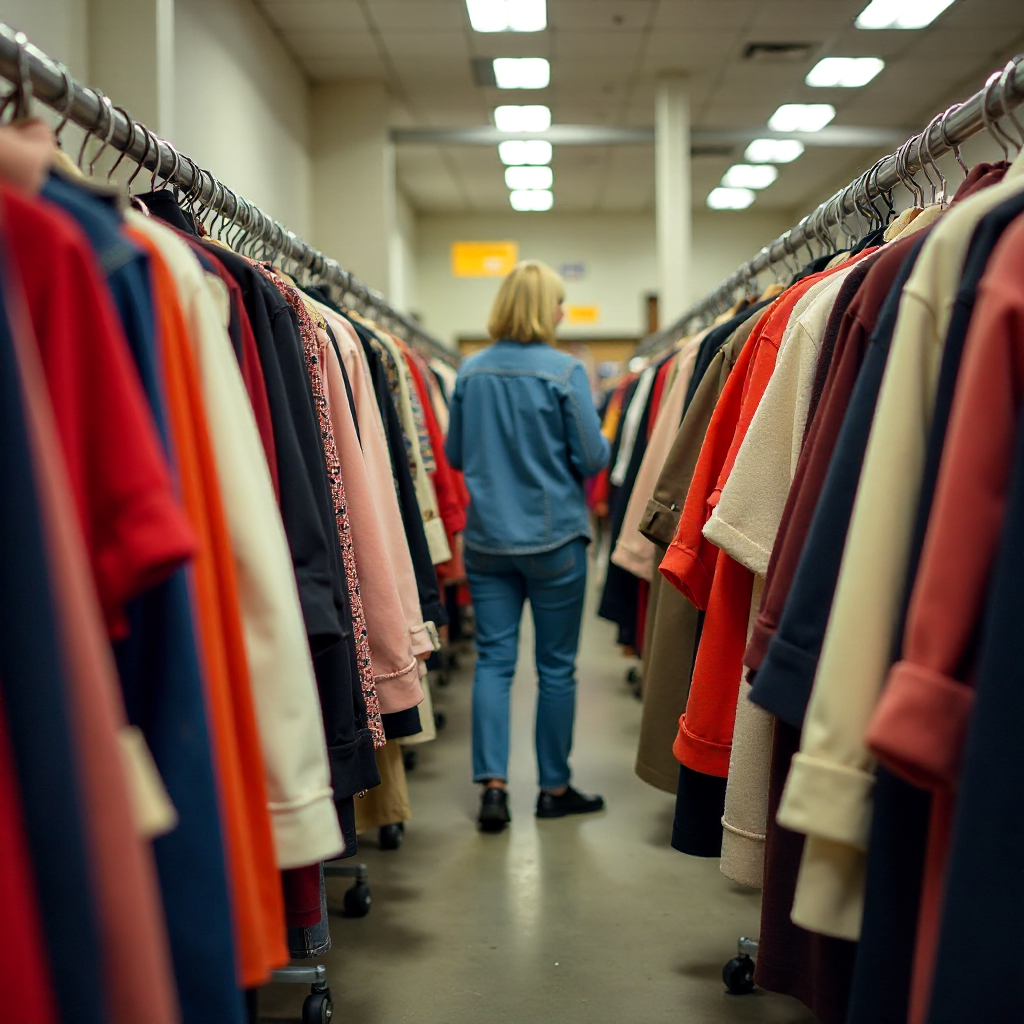
When a garment is resold rather than discarded, no new resources are consumed to replace it. The carbon, water, and labor already embedded in that piece get used for longer — which is the core logic of sustainable fashion, applied at zero manufacturing cost.
For budget shoppers, the math is straightforward. A linen blazer from a slow fashion brand might retail for $180. The same quality of garment — often a name brand with years of wear left — shows up at thrift stores for $8 to $25. Online platforms like Poshmark, ThredUp, Depop, and eBay expand the selection dramatically, though prices vary more than in-store finds.
A few practical tips for secondhand success:
- Check seams and fabric quality before buying — look for pilling, thinning fabric at stress points, and zipper condition.
- Search by fabric type ("linen," "wool," "100% cotton") on resale apps to filter toward more durable, natural materials.
- Visit thrift stores mid-week when new donations have been processed and competition from other shoppers is lower.
- Set saved searches on resale platforms for specific items so you're notified when they appear.
Secondhand shopping does require more patience than clicking "add to cart" on a fast fashion site. That friction is actually useful — it slows down impulse buying.
How to Evaluate Ethical Brands Without Overpaying
When buying new is unavoidable, knowing how to read a brand's ethics claims protects you from greenwashing and helps you spend wisely. Look for verifiable certifications rather than vague marketing language.
The most meaningful certifications to recognize:
- GOTS (Global Organic Textile Standard): Covers organic fiber content and prohibits toxic dyes and processing chemicals. One of the most rigorous textile certifications available.
- Fair Trade Certified: Focuses on labor standards and fair wages for workers in the supply chain.
- B Corp Certification: Assesses the entire company's social and environmental performance, not just individual products.
- OEKO-TEX Standard 100: Tests for harmful substances in finished textiles — useful even for non-organic items.
Beyond certifications, look for supply chain transparency. Brands that publish their factory names, audit results, and wage data are demonstrating accountability. Brands that use phrases like "eco-conscious" or "sustainably inspired" without specifics are almost certainly not.
The Good On You brand rating directory independently evaluates hundreds of fashion brands on people, planet, and animals — a practical shortcut when you're researching a specific label.
One honest caveat: even certified ethical brands can be expensive. Certifications cost money for brands to obtain and maintain, and fair wages are reflected in price. That's why secondhand shopping remains the better budget option — and why buying new from ethical brands should be reserved for items you genuinely can't find secondhand.
The Cost-Per-Wear Mindset: Spend Less Over Time
Cost-per-wear reframes what "expensive" actually means by dividing the price of a garment by the number of times you'll realistically wear it. A $15 fast fashion top worn three times before falling apart costs $5 per wear. A $75 well-made linen shirt worn 150 times costs $0.50 per wear.
This matters because fast fashion is only cheap at the point of purchase. The disposability built into its design means you replace items constantly — which adds up faster than most people track. The slow fashion approach of buying less but buying better is genuinely more economical over a two- to five-year window.
To apply cost-per-wear practically, ask before any purchase: how many times will I actually wear this, and does the price reflect that? A trendy piece you'll wear twice is expensive at any price. A classic, well-constructed coat you'll wear three times a week for four winters is cheap at $200.
The calculation also helps with secondhand purchases. A $40 thrift store wool coat that lasts a decade is one of the best value propositions in ethical fashion.
Low-Cost Strategies Beyond Shopping
Some of the most effective ethical fashion tactics involve no shopping at all. These approaches are underused because they require a bit more effort than opening a browser tab — but they deliver real results.
Clothing Swaps
Clothing swaps let you refresh your wardrobe without spending money. Organize one with friends, colleagues, or through local community groups — participants bring items they no longer want and take home items they love. The result is new-to-you clothing with zero production impact and zero cost.
Clothing Repair
Learning basic repair skills — sewing on a button, patching a small hole, re-hemming trousers — extends garment life significantly. A pair of jeans discarded over a blown-out seam is a missed opportunity. YouTube tutorials cover most basic repairs in under ten minutes, and a basic sewing kit costs less than $10.
Renting for Special Occasions
Formal wear and occasion dressing are where fast fashion does the most damage — items worn once and discarded. Clothing rental platforms offer designer and formal pieces for a fraction of the retail price, worn for the event and returned. This sidesteps the cost-per-wear problem entirely for infrequent use cases.
Building a Capsule Wardrobe
A capsule wardrobe — typically 30 to 40 versatile, interchangeable pieces — reduces the volume of clothing you need to own and maintain. When everything works together, you need less. Fewer pieces also means more intentional purchases and less exposure to trend-driven impulse buying.
Building Your Ethical Wardrobe Gradually (A Realistic Plan)
The most sustainable approach is a phased one: replace items only as they wear out, set a monthly budget, and prioritize the swaps that have the highest impact first.
A practical phased plan:
- Month 1: Complete your wardrobe audit. Donate or sell what you don't use. Identify three to five genuine gaps.
- Month 2–3: Fill gaps exclusively through secondhand channels. Set a monthly budget — even $20 to $30 goes far at thrift stores.
- Month 4 onward: When something wears out and can't be found secondhand, research ethical brands using certifications as your filter. Apply cost-per-wear before purchasing.
The key principle: never replace something that still works just to have a more "ethical" version of it. That defeats the purpose. The most ethical garment is the one already in your closet.
Progress in ethical fashion is not binary. Every secondhand purchase, every repaired item, every clothing swap is a meaningful choice — even if your wardrobe still contains fast fashion pieces you bought years ago. The goal is direction, not perfection.
Frequently Asked Questions
What is the cheapest way to start an ethical wardrobe?
Start with a wardrobe audit to identify what you already own and what you actually need. Then fill genuine gaps through thrift stores or clothing swaps before spending anything on new ethical brands. The cheapest ethical wardrobe is built mostly from what already exists.
Are secondhand clothes truly more sustainable?
Yes, in most cases. Secondhand clothing extends the useful life of garments that already exist, which avoids the production emissions, water use, and labor associated with manufacturing new items. The environmental benefit is significant even when accounting for shipping from online resale platforms.
How do I know if a brand is actually ethical or just greenwashing?
Look for third-party certifications (GOTS, Fair Trade, B Corp, OEKO-TEX) rather than self-applied marketing terms. Check whether the brand publishes its factory list and wage data. Independent rating tools like Good On You provide evidence-based assessments that cut through vague sustainability claims.
Can I build an ethical wardrobe without buying from specialty sustainable brands?
Absolutely. Secondhand shopping, clothing swaps, repair, and simply buying less are all ethical strategies that don't require purchasing from dedicated sustainable labels. In fact, these approaches often have a lower environmental footprint than buying new from certified ethical brands.
How many items does a basic ethical capsule wardrobe need?
Most capsule wardrobe frameworks suggest 30 to 40 items total, including shoes and outerwear. The exact number matters less than the principle: every piece should be versatile, durable, and worn regularly. A smaller, well-chosen wardrobe is more ethical than a large one, regardless of where the items came from.