The True Cost of Fast Fashion: What the Price Tag Doesn't Tell You
A $12 dress. A $7 t-shirt. A pair of jeans that costs less than a restaurant meal. These prices feel like wins — but they're calculated on costs that never appear on the receipt. The fast fashion industry has built one of the most profitable business models in modern retail by externalizing its true costs onto the environment, onto workers in distant supply chains, and onto future generations dealing with the mess left behind.
What Is Fast Fashion and Why Is It So Dominant?
Fast fashion refers to a production model that rapidly translates runway trends into cheap, mass-produced clothing — often moving from design to store shelf in as little as two weeks. The model depends on high volume, low prices, and constant novelty to keep consumers returning.
Brands like Zara, H&M, and Shein didn't invent disposable clothing, but they perfected the formula. Zara famously introduced up to 20 collections per year, compared to the traditional two seasons. Shein reportedly adds thousands of new items daily. The result is an industry producing an estimated 100 billion garments per year globally — roughly 13 items for every person on earth.
The dominance of fast fashion isn't accidental. It exploits real consumer desires: affordability, variety, and the social currency of wearing something new. For households with tight budgets, cheap clothing isn't a frivolous choice — it's often a practical one. That tension matters when we talk about solutions.
The Environmental Toll: From Production to Landfill
The fashion industry is responsible for roughly 10% of annual global carbon emissions — more than international aviation and maritime shipping combined, according to the United Nations Environment Programme. But carbon emissions are only one dimension of the damage.
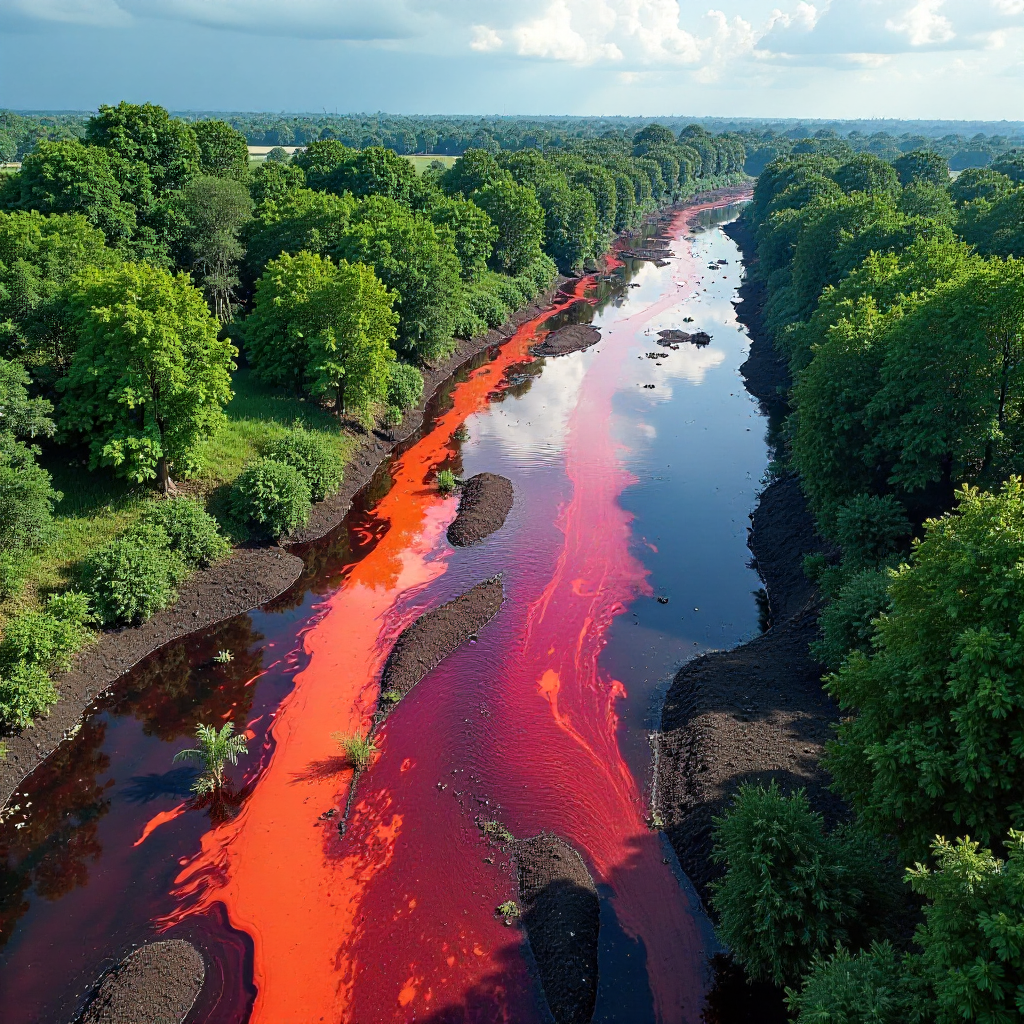
Water is another. Growing conventional cotton is notoriously water-intensive: a single cotton t-shirt requires approximately 2,700 liters of water to produce — enough drinking water for one person for 2.5 years. Dyeing and finishing textiles also releases toxic chemicals into local waterways. The Citarum River in Indonesia, one of the world's most polluted, runs through a region dense with textile factories.
Then there's what happens at the end of a garment's short life. The Ellen MacArthur Foundation estimates that the equivalent of one garbage truck of textiles is landfilled or incinerated every second. Textile waste has become one of the fastest-growing waste streams globally, with synthetic fabrics taking hundreds of years to decompose. In landfills, these materials leach dyes and chemicals into soil and groundwater long after the trend they represented has been forgotten.
Microplastics: The Invisible Pollution Problem
Microplastics from synthetic clothing represent one of the least visible but most pervasive consequences of the fast fashion system. Every time a garment made from polyester, nylon, or acrylic goes through a washing machine, it sheds thousands of microscopic plastic fibers that pass straight through water treatment systems and into rivers, lakes, and oceans.
A 2016 study published in Environmental Science & Technology estimated that a single load of synthetic laundry can release more than 700,000 microplastic fibers. These particles have now been detected in Arctic sea ice, in the deepest ocean trenches, in fish tissue, in human blood, and in placentas. The long-term health effects remain under active research, but the scale of contamination is already irreversible in any near-term sense.
Synthetic fibers dominate fast fashion because they're cheap to produce and easy to work with. Polyester alone accounts for over 50% of global fiber production. Choosing natural fibers where possible — and using a washing bag designed to capture microfibers — can reduce but not eliminate this problem at the individual level.
The Human Cost: Who Really Makes Our Clothes?
Behind every bargain garment is a supply chain that relies on keeping labor costs as low as possible. Garment workers — the majority of them women — in countries like Bangladesh, Cambodia, Vietnam, and Ethiopia often earn wages that fall well below a living wage, working long hours in conditions that range from difficult to dangerous.
The 2013 Rana Plaza factory collapse in Dhaka, Bangladesh remains the starkest symbol of what those conditions can mean. Over 1,100 workers died when a building that had been flagged as structurally unsafe collapsed. Brands sourcing from the factories inside had been warned. The disaster sparked international attention, but structural change in the industry has been slow and uneven.
Wages are only part of the picture. Workers in fast fashion supply chains frequently face suppressed union rights, exposure to toxic chemicals without adequate protection, and production quotas that create intense physical strain. The supply chain is deliberately fragmented — brands contract to suppliers who subcontract further — which makes accountability genuinely difficult to enforce and easy to evade.
Why We Keep Buying: The Psychology of Fast Fashion
Knowing that fast fashion causes harm doesn't automatically change behavior — and that gap between awareness and action is worth understanding honestly rather than moralizing about. Overconsumption in clothing is driven by forces that go well beyond individual willpower.
Trend cycles have been artificially accelerated to create a permanent sense of being behind. Social media amplifies this: influencer culture and the pressure to avoid being seen in the same outfit twice have compressed the perceived lifespan of clothing dramatically. Algorithmic feeds on platforms like Instagram and TikTok function as continuous advertising engines for new purchases.
Price anchoring also plays a role. When a top costs $8, spending $80 on a quality alternative feels irrational, even if the $80 item lasts ten times longer. The upfront cost is visible; the long-term value isn't. And for shoppers with limited disposable income, the $80 option simply isn't accessible — which is a structural problem, not a personal failing.
What You Can Do: Practical Alternatives to Fast Fashion
Reducing your participation in fast fashion doesn't require perfection or a complete wardrobe overhaul. A few shifts in approach, applied consistently, add up to meaningful change — and often save money over time.
- Buy secondhand first. Platforms like ThredUp, Depop, Vinted, and local thrift stores have made secondhand shopping more accessible than ever. Buying pre-owned clothing keeps garments in circulation longer and avoids new production entirely.
- Invest in fewer, better pieces. A garment worn 30 times has a dramatically lower per-wear environmental cost than one worn three times. Choosing quality over quantity — even if it means buying less overall — is one of the highest-leverage individual choices available.
- Learn basic repairs. A missing button or a small tear shouldn't end a garment's life. Sewing kits are cheap, and tutorials are free. Repair extends the lifespan of clothing you already own without any new purchasing required.
- Wash synthetics in a microfiber-catching bag. Products like the Guppyfriend bag capture a significant portion of microplastic fibers before they reach the drain — a small habit with a measurable effect.
- Research brands before buying new. Tools like Good On You rate brands on environmental and labor practices. Perfect brands are rare, but some are genuinely better than others.
None of these steps require abandoning fashion entirely. They require shifting from reflexive consumption toward more deliberate choices — which, for most people, is a realistic ask.
The Bigger Picture: Industry Responsibility and Policy
Individual choices matter, but they can't substitute for systemic change. The scale of the fast fashion industry's impact — on climate, on water systems, on workers — is too large to be solved by consumer behavior alone.
Several policy directions are gaining traction. The European Union's Circular Economy Action Plan includes textile-specific measures: extended producer responsibility schemes, mandatory durability standards, and restrictions on the destruction of unsold goods. France has already banned the destruction of unsold clothing. These are meaningful precedents.
On the brand side, genuine progress requires more than sustainability marketing. Circular fashion models — take-back programs, rental schemes, design for disassembly — exist and are being piloted by some brands, but remain marginal relative to the industry's overall output. Transparency in supply chains, including published factory lists and third-party audits, is a basic accountability measure that more brands should be required to meet.
The honest reality is that fast fashion is cheap because its costs are offloaded elsewhere. Pricing that reflects actual environmental and social costs would change the economics of the industry — but that requires regulation, not just goodwill. Consumer pressure creates some leverage, but legislative frameworks create the conditions for structural change at scale.
Frequently Asked Questions
What makes fashion "fast fashion"?
Fast fashion is characterized by rapid production cycles, low prices, and high volume — translating trends into mass-market garments within weeks. The model prioritizes speed and turnover over quality or durability, encouraging frequent purchasing and early disposal.
How much clothing ends up in landfills each year?
Estimates vary, but the Ellen MacArthur Foundation's widely cited figure suggests the equivalent of one garbage truck of textiles is landfilled or incinerated every second globally. In the United States alone, the EPA estimates that over 11 million tons of textile waste are sent to landfill annually.
Is sustainable fashion actually affordable?
Ethical and sustainable brands often charge more upfront, which is a real barrier for many shoppers. However, secondhand and thrift shopping offers a genuinely affordable entry point into more sustainable consumption. Cost-per-wear thinking — dividing price by how many times you'll actually wear something — also shifts the calculus on quality purchases.
What are microplastics and why do they matter?
Microplastics are plastic particles smaller than 5mm. In the context of clothing, they're shed from synthetic fabrics during washing and enter waterways. They've been found throughout marine ecosystems, in drinking water, and in human tissue. Long-term health effects are still being studied, but environmental contamination is already widespread.
How can I tell if a clothing brand is ethical?
The Good On You app and website rates brands on environmental impact, labor conditions, and animal welfare based on publicly available data. Look for third-party certifications like Fair Trade, GOTS (Global Organic Textile Standard), or B Corp status — these require verified compliance rather than self-reporting. Published supplier lists are another positive signal.