Interview with an Ethical Fashion Designer: Behind the Scenes
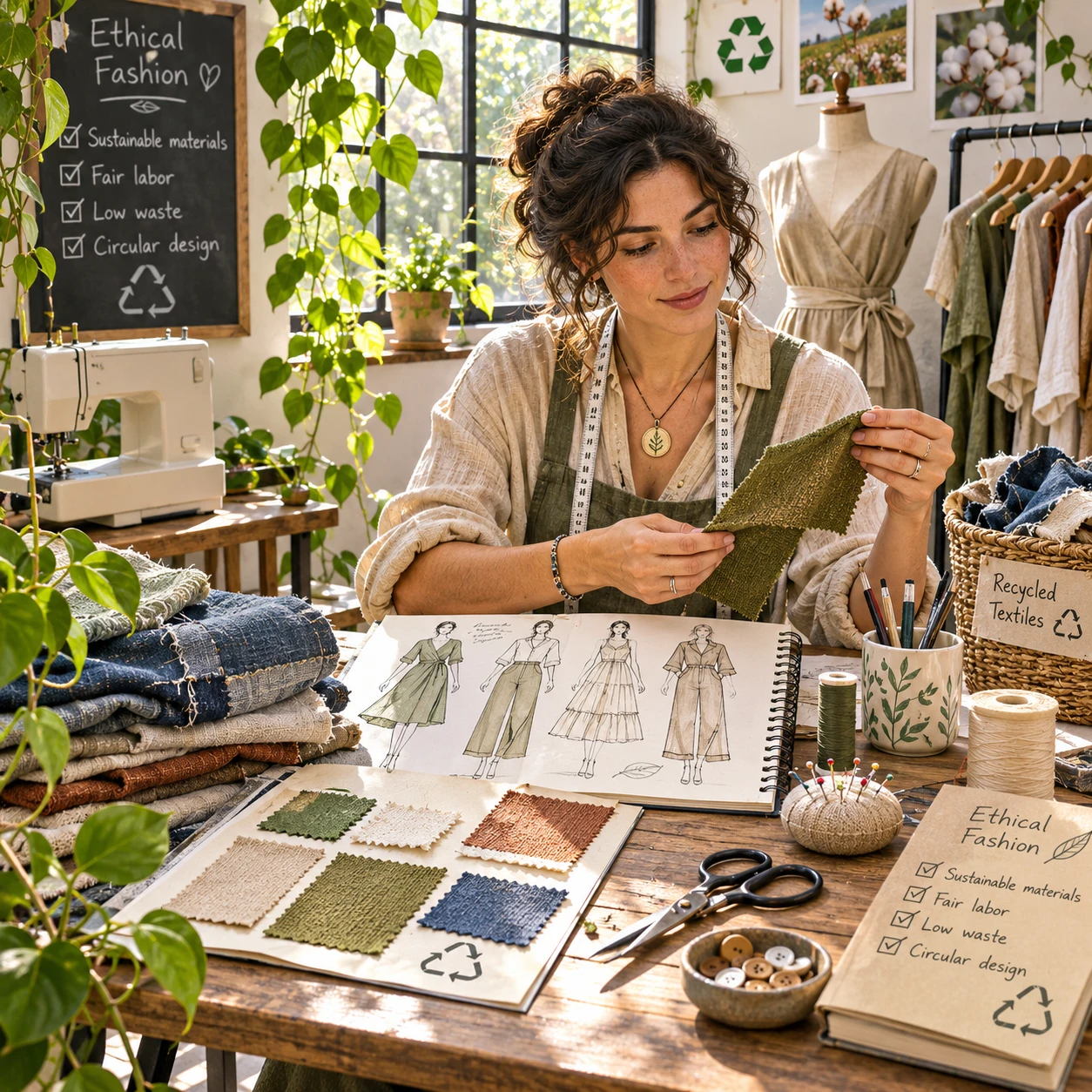
What does it take to make a garment more responsibly, from the first sketch to the final stitch? We spoke with an independent ethical fashion designer about the decisions that rarely appear on a clothing label: where materials come from, how suppliers are chosen, and what happens when a good design idea meets real-world limits.
The designer’s answers offer a grounded look at sustainable fashion. There is no single certification or perfect fabric that resolves every concern. Instead, ethical design involves asking better questions at each stage and being honest about what a brand can and cannot control.
Meet the Designer and Their Mission
An ethical fashion designer considers a garment’s effects on people and the environment throughout its life, from sourcing and production to use and disposal. Their mission is to make those choices deliberate, explainable, and better over time.
Interviewer: How did you begin working in fashion, and when did responsibility become central to your work?
Designer: “I started with pattern cutting and a fascination with how clothing is constructed. Later, I became curious about everything a finished piece hides: who spun the yarn, who sewed the seams, and how much fabric was left on the cutting-room floor. That curiosity changed the way I designed. I couldn’t treat the garment as an isolated object anymore.”
For this designer, ethical fashion is a practice rather than a label. It means weighing the needs of garment workers, the impact of materials, and whether a customer can wear a piece for years. Those priorities can conflict. A locally made product may still use imported fabric, while a recycled material may have limitations in feel, durability, or availability.
Interviewer: What guides a decision when those values pull in different directions?
Designer: “I ask what the biggest risk is in this particular decision. Then I look for evidence, not a perfect answer. If I can’t verify a claim, I don’t want to build the whole story around it.”
From Inspiration to Finished Garment
A responsible design process starts by defining the garment’s purpose, then tests the idea through sketches, prototypes, fit checks, and production planning. Considering use and construction early can prevent wasteful revisions later.
Interviewer: Take us from the first idea to a finished piece. Where does the process begin?
Designer: “I begin with a wearer and a real use. Is this a jacket for daily commuting, or a shirt that needs to work across several settings? I look at what existing clothes do well and where they fail. Then I sketch shapes and think about the fabric and construction together, rather than drawing something that may be impossible to make responsibly.”
Next come fabric samples and prototypes. A first sample may reveal that a sleeve restricts movement or that a seam needs more reinforcement. The designer may adjust the pattern, change the construction, or reconsider the material before approving a production sample. That sequence takes time, but it gives the maker a chance to catch fit and durability issues before they multiply across a run.
Interviewer: How does waste reduction enter the design process?
Designer: “I pay attention to how pattern pieces fit on the fabric width. Sometimes a small change in pocket shape or panel placement makes better use of the cloth. I also plan quantities carefully. Producing extra stock just in case can create a different kind of waste.”
Choosing small batches can limit unsold inventory, though it may raise unit costs and make restocking slower. A thoughtful design is not automatically low-impact; how much is made and whether people wear it often both matter.
Choosing Materials and Suppliers
Responsible sourcing means evaluating a material’s origin, processing, performance, and available evidence, while also considering the supplier relationship. Organic and recycled materials can help address specific concerns, but neither is automatically the best choice for every garment.
Interviewer: What do you look for when choosing fabric?
Designer: “I look at the fiber, but I also ask how the fabric behaves. Will it last? Can it be repaired? Does it need special care? A material that sounds better on paper may be a poor choice if the garment wears out quickly or requires complicated maintenance.”
Organic fibers may reduce reliance on certain agricultural inputs, depending on the standard and supply chain. Recycled fibers can use existing material, but their quality and recyclability vary. Blends may improve strength or comfort, yet mixed fibers can make end-of-life recycling more difficult. The right material depends on the job it needs to do.
Interviewer: What questions do you ask a supplier?
Designer: “I ask where the fabric was made, what documentation supports its composition, what minimum order is required, and whether the supplier can explain the processing stages. I also ask what happens if there’s a quality problem. A supplier relationship needs regular conversation, not just a purchase order.”
Supply chain transparency has limits, especially when a small designer buys through intermediaries. Still, keeping invoices, specifications, certifications, and supplier correspondence creates a clearer record than relying on broad phrases such as “eco fabric.” The U.S. Federal Trade Commission’s Green Guides explain how environmental marketing claims should be qualified and supported in the United States.
Making Production More Responsible
More responsible production combines fair labor practices, clear communication, realistic production volumes, and efforts to reduce waste. A designer can influence these choices, but often cannot independently verify every condition across a complex supply chain.
Interviewer: How do you think about fair labor when choosing a manufacturer?
Designer: “I want to know who will make the clothes, whether the timeline is realistic, and how the workshop handles pay and working conditions. A low price can hide pressure somewhere in the chain. I’m careful not to assume that a small workshop is automatically fair or that a large supplier is automatically harmful.”
Useful steps include requesting written information about facilities, asking whether subcontracting is allowed, and agreeing on production schedules that do not depend on last-minute rush work. When possible, a designer can visit a workshop or work with a supplier that provides credible audit or certification information. Documents help, but they do not replace ongoing communication.
Interviewer: Which production decisions are most within your control?
Designer: “I can avoid changing an order at the last minute, pay invoices on the agreed schedule, and plan quantities around actual demand. I can also ask what happens to offcuts and seconds. I can’t fix every weakness in the industry, but I can be accountable for the choices I make.”
Waste reduction can include efficient pattern layouts, using suitable offcuts for smaller components, and careful quality planning. Reuse should not become a blanket excuse to make more clothing; the first question is still whether the quantity and product are needed.
The Challenges Behind Ethical Design
Ethical design faces practical limits: responsible materials may cost more or be hard to source, small orders can raise unit prices, and durability or appearance may require compromise. These constraints do not make better choices pointless, but they do make transparent decision-making essential.
Interviewer: What is the hardest trade-off you encounter?
Designer: “Availability. I may find a fabric that meets the design and sourcing requirements, then learn the minimum order is far beyond what I need. I have to decide whether to change the design, find another supplier, or wait. Each option affects cost, timing, and the final product.”
There is also a tension between durability and aesthetics. A robust fabric may feel heavier than intended; a delicate finish may need more careful repair. Instead of promising that every piece suits everyone, a designer can explain expected wear, care instructions, and repair options.
Cost deserves similar honesty. More responsible production can involve higher material prices, smaller runs, and more time for supplier conversations. That can put the final garment out of reach for some shoppers. Slow fashion should not be framed as a moral test: repairing, swapping, or buying secondhand can be practical alternatives when a new ethical product is unaffordable.
Advice for More Conscious Fashion Choices
To make more conscious fashion choices, check what a brand can substantiate, consider how often you will wear the item, and look for clear information about materials, production, and care. Buying less, choosing well, and maintaining clothes are practical parts of slow fashion.
Interviewer: What should shoppers ask before buying?
Designer: “Start with the garment itself. Does it fit your life? Is the fabric described clearly? Does the brand explain where and how it is made, and can it answer specific follow-up questions? Then think about care and repair. A piece you wear regularly for years may be a more useful purchase than something marketed with a sustainability slogan.”
- Look for specifics: Fiber content, production location, certifications, and factory information are more useful than broad claims such as “conscious” or “green.”
- Check the scope: A brand may use recycled packaging while offering little information about garment production. Ask what the claim covers.
- Assess the garment: Inspect seams, closures, lining, and care instructions. Consider whether a tailor can repair common points of wear.
- Use what you own: Rewear, mend, swap, rent, or buy secondhand when those options meet your needs.
For aspiring designers, the same habits apply at a different scale: document sourcing decisions, learn pattern efficiency, understand construction, and build supplier relationships before deadlines become urgent. A small, well-planned collection can teach more than a large launch that depends on guesses.
Frequently Asked Questions
What makes a fashion designer ethical? An ethical fashion designer considers worker welfare, sourcing, environmental impact, and product longevity, and communicates honestly about both progress and gaps. The term has no single universal definition, so look for specific practices and evidence.
How can shoppers check whether a brand’s claims are credible? Look for precise, qualified claims and supporting details such as fiber composition, supplier information, certification scope, and production locations. Be cautious when a broad environmental promise has no explanation or evidence.
Are sustainable materials always the most ethical choice? No. A material’s impact depends on its origin, processing, durability, care needs, and end-of-life options. A better-sounding fiber can be unsuitable if it shortens a garment’s useful life or cannot be sourced transparently.
What is one practical way to buy more responsibly? Before purchasing, ask whether you will wear the item often and whether you can care for and repair it. Choosing a garment that fills a real need is a useful first step, whether it is new, secondhand, or already in your wardrobe.